What does it actually mean to “think globally, act locally?” - An SVCYA Member's Reflections on the 2026 Local Conference of Youth USA
This blog is written by Kelly Liu, SVYCA Member and Co-Lead of the San Jose Action team.
This October, I traveled to Columbus, Ohio, for an unforgettable weekend at the 2026 Local Conference of Youth (LCOY) USA with more than 100 young climate leaders across the country ranging from students in Pennsylvania to Colorado, New York, and Idaho. Held at the Ohio State University, LCOY is the United States’ official youth climate conference endorsed by YOUNGO, the Youth and Children’s Constituency of the United Nations Framework Convention on Climate Change (UNFCCC). Across three days, I had the amazing opportunity to learn from each delegate, discuss climate policy, and ultimately draft the National Youth Statement.
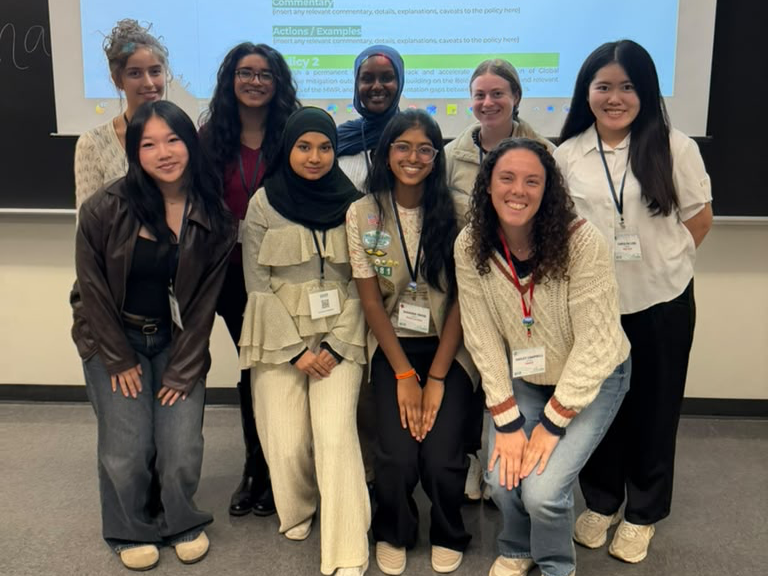
This statement eventually contributes to YOUNGO’s Global Youth Statement which is developed through LCOYs around the world and presented at the United Nations Climate Change Conference, or COP. In other words, the conversations happening in Columbus during LCOY eventually become part of a collective youth voice in international climate negotiations.
Over the weekend, however, I realized that the path from local action to global action is not nearly as simple as it sounds.
Day 1: Starting With Relationships
Our first day was filled with conversations that brought me to rethink climate action at its most fundamental level: our relationships.
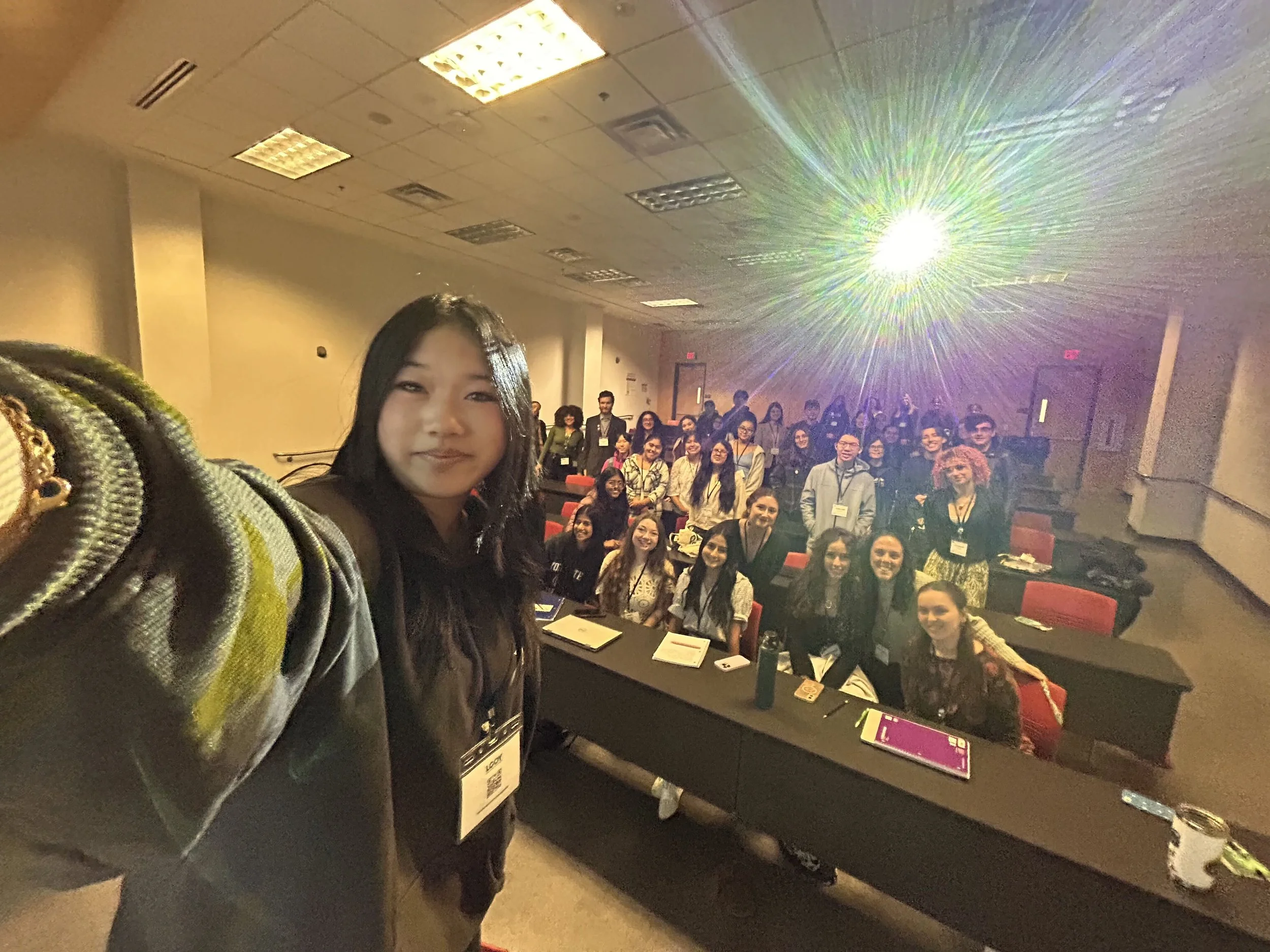
In the first opening speech, Indigenous Knowledge Consultant Shelly Corbin asked us to consider our relationships with water, food, land, and community. Within climate action, she emphasized the need to understand where we fit within our environment and the responsibilities that come with those relationships. I strongly resonated with this message because my inspiration for my own advocacy journey began with air pollution I observed in my community and the realization that there was a need to care for our shared space.
During a panel discussion, Stevie Pasamonte from the National Campaign for Transit Justice highlighted how effective advocacy requires connecting grassroots organizing (e.g. students, residents, and advocates building momentum within their communities) with “grasstops” leaders who have the ability to enact institutional change. Within my own advocacy, I have seen this firsthand especially through working on passing resolutions across various boards so it was amazing to see this idea put into language and rearticulated so well.
Overall my biggest takeaway was that local action is not the smaller counterpart to global action, but rather a foundation where our most important relationships are built, coalitions are formed, and broader change begins.
Day 2: From International Policy to Emerging Technology
On the second day of LCOY, we went straight into the policy drafting process for the National Youth Statement!
I first started the day off with working on International Policy Drafting, tasked with drafting specific policies that could fit within existing international climate frameworks.
Our group focused on mitigation, and more specifically, how we can leverage international commitments to reduce emissions.
We proposed a just and equitable roadmap for transitioning energy systems away from fossil fuels (interesting fact: the term fossil fuels wasn’t mentioned in any policies at COP until COP28 in 2023) while expanding financing to make that transition possible.
One discussion that challenged my thinking in particular was a policy regarding geoengineering and technological approaches to climate change. Our group proposed that technologies such as geoengineering, carbon capture, and blue hydrogen should not become substitutes for directly reducing emissions. I previously had the notion that technological innovation was inherently a step toward solving climate change.
Through our discussion, I realized that many geoengineering approaches, for example, may counteract aspects of warming, however they don’t eliminate the root cause of warming. This doesn't mean technology has no role, as carbon removal may complement emissions reduction efforts for particularly hard-to-abate sectors, however technological fixes cannot become an excuse to avoid reducing emissions at their source.
After spending a morning thinking globally, the afternoon brought me back to none other than Silicon Valley.
I joined the Technology, Data, and Innovation Track, where our discussions ranged from multi-hazard early-warning systems to emerging technologies.
Our discussion then moved onto data centers. As a San Jose team co-lead, data centers have been a major hot topic for our organizing, so I was really excited to hear the perspectives of other youth advocates. We examined the repercussions of AI data center development, particularly its infrastructural demands with electricity, water, grid capacity, air pollution, and more. We eventually developed three interconnected proposals addressing data centers’ clean energy and resource use, limits on water consumption and pollution, and accountability through reporting and penalties.
This discussion made clear to me how interconnected “global” and “local” were. AI operates globally, however the electricity powering its servers come from someone else’s grid. The water cooling them comes from someone’s watershed. The backup generators polluting the air goes directly into someone’s neighborhood. This ultimately reminded me how global trends have deeply local consequences, with vulnerable communities bearing the greatest burdens.
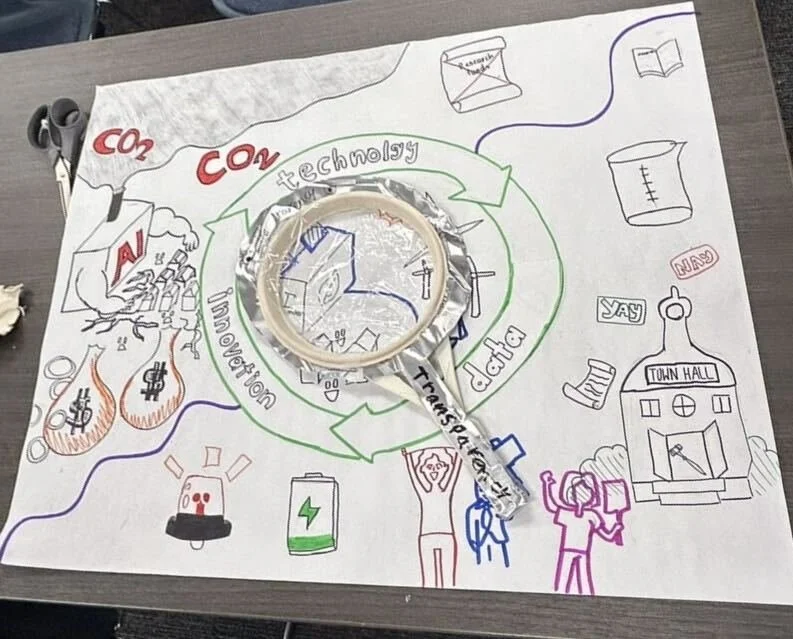
As a fun little capstone after we finished drafting, we were tasked with illustrating the future we envisioned on a poster. Our group drew two trajectories: one showing where current trends could take us and another imagining a future shaped by our proposed solutions. We even created a comically large DIY magnifying glass out of recycled materials to spotlight the problems policymakers need to examine more closely. This was one of the most fun parts of the weekend, but it was also a great exercise to creatively imagine what the world could look like if our ideas were implemented.
Day 3: From Columbus to COP
On my final day, everything came together through the National Youth Statement. With everyone working on different tracks ranging from urban infrastructure to climate accountability frameworks, we combined all of them into one document representing youth climate priorities across the United States.
After hours spent debating and deliberating the language, it felt surreal that these policies would soon be brought into international climate conversations.
I entered my final workshop about the UNFCCC system, breaking down how COP negotiations operate and where young people can engage. I learned about engaging directly with UN climate negotiators with Hailey Campbell, executive director of Care About Climate.
I especially loved this advice because, after spending a weekend drafting policies, it was really helpful to learn about how we can advance actual change through institutions.
Bringing the Global Back Home
I arrived at LCOY thinking the phrase “think globally, act locally” described two different scales of climate work: grassroots local work and international policy work. However, after three days, I came to understand that the two are inseparable.
Every conversation highlighted how local experiences can guide global priorities, with global commitments depending on local action to become reality. In many ways, Silicon Valley Youth Climate Action embodies this connection where our campaigns begin with issues facing our communities but are fundamentally inseparable from larger questions of climate policy, technology, and justice.
While this familiar phrase is still very meaningful, I now have my own addition to it: think globally, act locally, and build bridges that bring the “global” home and carry the “local” outward.