
From Classrooms to County: How a Group of High School Students Built The Peninsula’s First Electrification Outreach Team
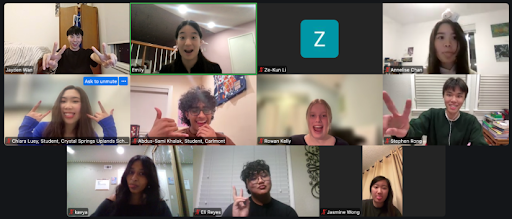
On our last meeting of the year, eight interns spread across San Mateo County gave each other a virtual high five. It sounds small. But in that moment, it felt like exactly the right way to close out a year that had been bigger than any of us expected.
That meeting marked the end of the Peninsula's first student-led electrification outreach team, built through a $35,000 grant from Peninsula Clean Energy and brought to life by SVYCA, eight interns, and six advisors. Our mission was to bring clean energy education directly to high school campuses across the Sequoia Union, San Mateo Union, and Jefferson Union High School Districts. By the time we hit that virtual high five, we hadn't just met the grant milestones. We'd surpassed them.
How it Started
SVYCA built the program around a pretty straightforward idea: recruit students from different districts, place them in their own communities, and let them lead. The targets were specific: reach 500 students in person, engage PTAs, meet with district leadership, and drive traffic to Peninsula Clean Energy’s programs.
What it actually looked like was showing up. Classrooms, committee meetings, school board rooms. Places where students are usually not the ones leading the conversation.
Working Inside the Districts
One of the most meaningful threads of the year was our work with the Sequoia Sustainability Committee. Getting a seat at that table as a student intern meant being part of real institutional conversations about what electrification looks like at the district level.
Sami Khalak and I also worked on the policy side, helping draft public comments and speaking directly to decision-makers about district electrification. That part was uncomfortable at first. It is one thing to care about clean energy, and another to stand up and argue for it in a room where people are making actual decisions.
The SUHSD facilities tour made everything more concrete. Walking through the buildings, seeing outdated systems up close, we start to understand why timelines are slow and why change takes more than just good ideas.
Getting in Front of Students
We presented at Carlmont for Earth Day. At Woodside. At Crystal Springs Uplands School. Over the course of ayear, our team reached over 800 high school students, talking about Peninsula Clean Energy programs, the case for electrification, and what it actually means to take these issues seriously as a young person.
There's something that happens when a peer stands up and talks about clean energy with genuine enthusiasm. It's different from a teacher or an administrator delivering the same information. People listen differently. A few of these presentations led to real conversations afterward, students curious about the internship, asking how to get involved, and that ripple effect is hard to put a number on but easy to feel.
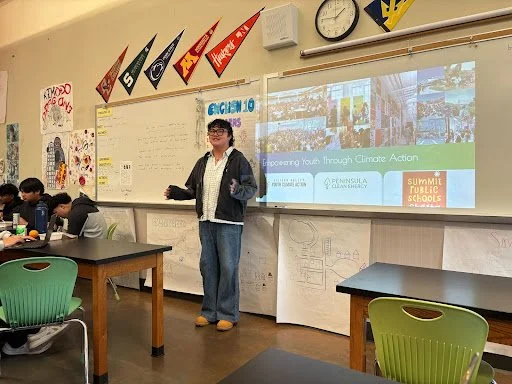
Summit Shasta High School (JUHSD) Presentation 2025
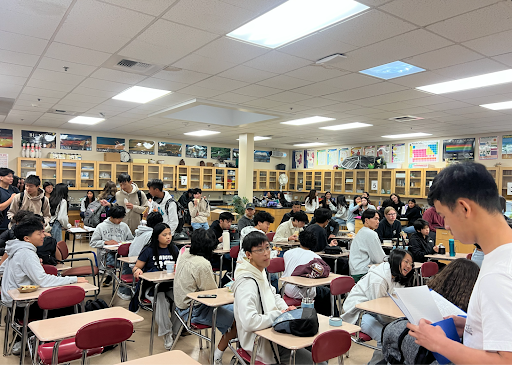
Mills High School (SMUHSD) Presentation 2025
Re-volv and the Financial Side of Clean Energy
One conversation that genuinely changed how I think about this work was with someone from Re-volv, an organization that helps nonprofits and schools finance solar installations through government rebates. Sami and I sat with them and learned how the funding mechanics actually work, how rebates get structured, how organizations that could never afford solar upfront can access it with the right financing model.
It reframed the problem for me. The barrier to electrification is rarely that people don't care. It's that the financial pathway isn't visible to them. Walking away from that conversation, I felt like I could speak to that gap in a way I hadn't been able to before.
Applications Doubled
Midway through the year, we started advertising the internship for the next cohort. Applications doubled from the previous year. Peers I knew started reaching out, asking what the work was really like, whether it was worth it, how to position themselves as candidates.
I had that conversation more times than I expected, and I never got tired of it. Because the honest answer was always: yes, it's worth it, and here's why. The fact that interest in the program grew that much in a single year says something about what students are hungry for.
The Award
At SVYCA’s first awards reception, our team received the Outstanding Educator Award for advancing clean energy education in the Bay Area.
What I felt in that moment was not really pride. It was more like appreciation. Getting to stand in front of 800 students who are in the same place I was a few years ago, and talk about something I genuinely care about, is not something I take lightly.
Clean energy, for me, is not abstract. It is something I care about on a day-to-day level. Being able to share that, even if it only sticks with a few people, is enough.
What We Accomplished, and What Comes Next
By the close of 2025, the team exceeded the grant's targets through our social media campaign, engaged parent-teacher associations across the county, and secured meetings with executive staff across multiple school districts, with several committing to concrete next steps on facilities electrification.
The first cohort of PCE interns closed a chapter. But the relationships we built with districts, the presence we established on campuses, and the doubled applicant pool for next year's cohort, that's the foundation the next group gets to build on.
That virtual high five felt like an ending. It was also, I think, a beginning.
To learn more about getting engaged with SVYCA, visit our website.
Learn more about our upcoming Youth Summer Leadership Academy here.
Chiara Luey is a student intern with Silicon Valley Youth Climate Action and a member of the 2025 Peninsula Clean Energy Electrification Outreach Team.